Product case study · Logistics & warehouse operations
Web & Mobile Warehouse Inspections with RAMS
Salt developed RAMS, a web and mobile application for warehouse rack inspections, safety visibility, and maintenance follow-up.
Discuss a similar projectThe starting point
The business problem.
Inspection records were spread across spreadsheets, paper, and photos. Teams needed a consistent way to record findings, identify risk areas, and track what happened next.
Salt’s contribution
What the work covered.
The system connects inspection schedules, structured findings, photo evidence, severity classifications, and repair workflows. Web dashboards support supervisors, while a mobile experience supports inspectors in the warehouse.
Application workflow
From warehouse inspection to follow-up
- 01
Inspect
Work through inspection tasks in the mobile application.
- 02
Record
Connect findings, photos, and severity to a rack and location.
- 03
Review
Use web dashboards to investigate condition and issue status.
- 04
Follow up
Record verification and recommended maintenance actions.
Implementation detail
How responsibilities and technology fit together.
| Area | Implementation or responsibility | Documented scope |
|---|---|---|
| Inspector experience | React Native mobile application | Inspection tasks, photographs, findings, severity, and rack/location context. |
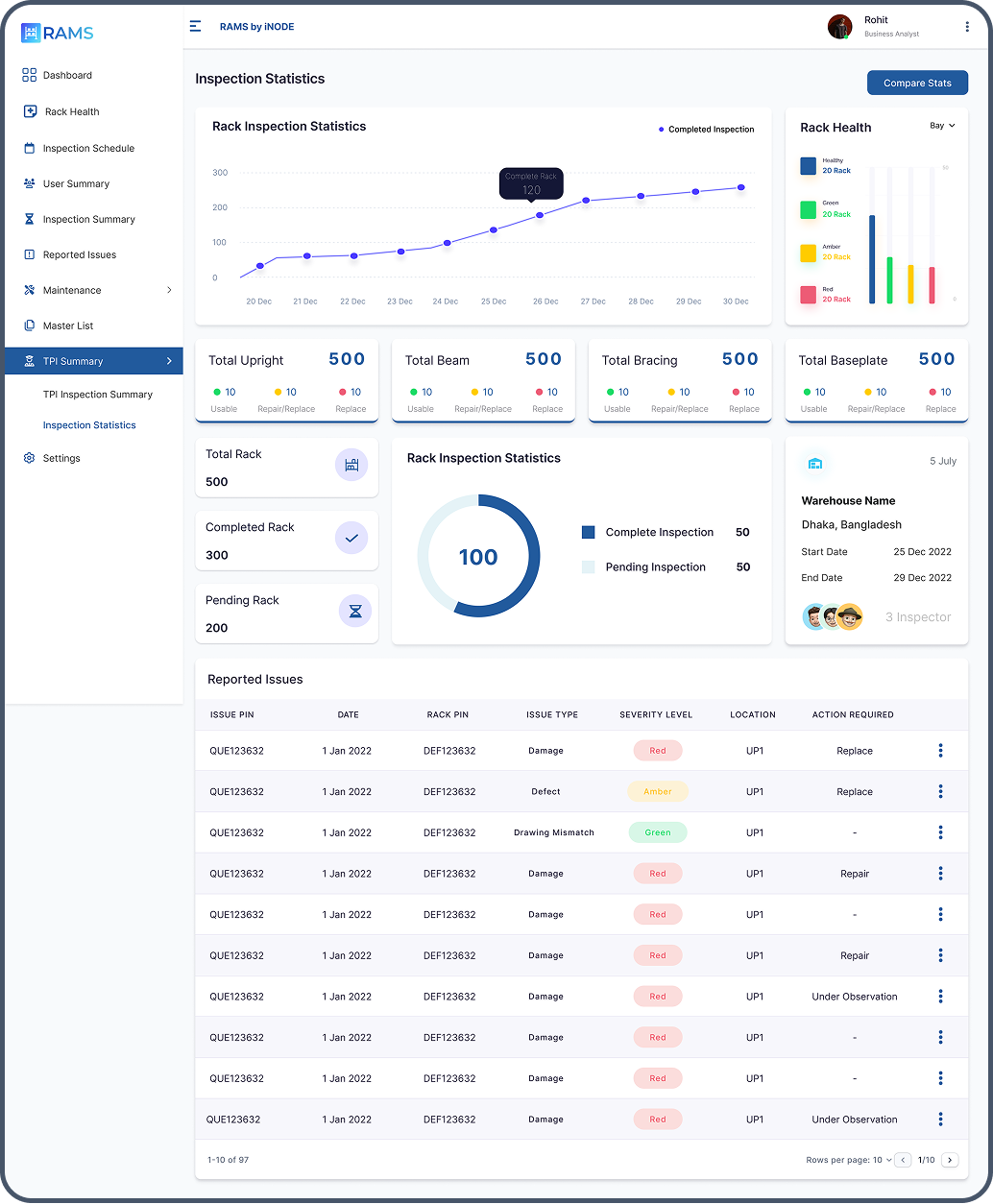
| Supervisor experience | Next.js web application | Inspection statistics, condition summaries, rack-layout status, and issue visibility. |
| Application and records | TypeScript, Node.js, PostgreSQL | The documented stack supporting the connected web and mobile product. |
| Quality work | Within the product engagement | Critical workflow checks, regression, feature, dashboard performance, and load testing. |
Inside the delivery
The work in practical terms.
Explore the scope and implementation details relevant to a similar engagement.
Project detail
How the work
comes together.
The operational setting
RAMS connects warehouse inspectors, supervisors, and maintenance follow-up around rack condition. Inspection evidence previously lived across paper, spreadsheets, and photos, making it difficult to see which finding belonged to which location and whether action had followed. The product combines a mobile inspection experience with a web management view.
From inspection to a traceable issue
Inspectors can work with scheduled, ongoing, and completed tasks, record findings, add photographs, and classify severity. An issue can be connected to its warehouse location and rack identifier so supervisors have context for the evidence.
Verification and follow-up record the recommended action, such as repair, replacement, or observation. This connects the inspection record to the maintenance workflow. The system’s purpose is to make that work visible and traceable; software records alone do not establish that a physical repair has been completed correctly.
Visibility for supervisors
Web dashboards bring together inspection statistics, condition summaries, rack-layout status, and breakdowns by severity or component. Green, amber, and red status views provide a way to identify areas requiring attention and move from an overview into the underlying issue.
The published solution also includes material-handling equipment and forklift impact monitoring views, with events and urgency information. These capabilities provide additional operational context. They should not be interpreted as a verified reduction in incidents or a substitute for the organization’s safety procedures.
Delivery across web and mobile
The project covered process mapping, interface design, and engineering for both web and mobile use. The documented stack includes Next.js, TypeScript, Node.js, React Native, and PostgreSQL. This supports different interfaces for field inspection and supervisory review around shared records.
Quality work included critical workflow checks, regression testing, dashboard performance, and feature and load testing. This is evidence of testing within the development engagement. It is not presented as a separate third-party safety certification or a guarantee that every operating condition was covered.
Delivered capability
What the team can do.
Operations teams can review rack condition, track inspection completion, and coordinate maintenance from one system.
Technology used
The implementation stack.
Next.js, TypeScript, Node.js, React Native, PostgreSQL
Explore ways to work with SaltApply the experience
Explore relevant expertise.
For your project
Connecting field work with office oversight?
Use these questions to frame your scope. These are planning considerations for a new engagement, not additional features claimed for this project.
- Which field tasks must work on mobile, and what connectivity is available?
- How will locations, assets, evidence, and issue owners be identified?
- Who verifies corrective work, and what record is needed to close an issue?
Build on relevant experience
Working through a similar challenge?
Tell us about your users, existing systems, and the change you need. We’ll help define an appropriate scope for your project.